

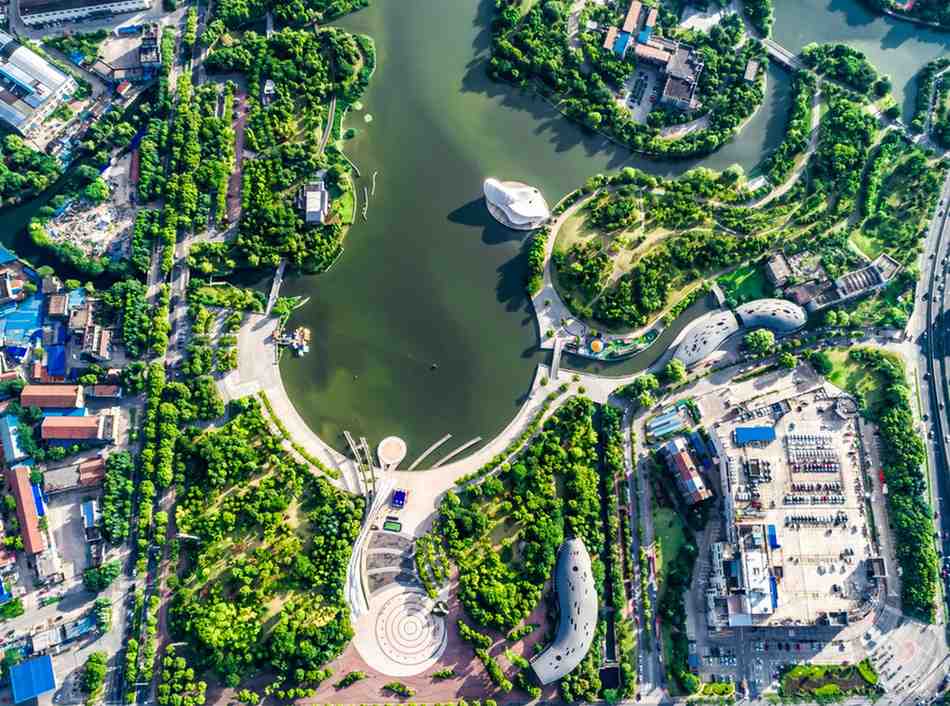
Singapore is a city state that lies upon layers, physical layers of land reclamation, infrastructure, and green space. Within such a setting, Geospatial Data begins to transcend the mere positional representation that a city map holds. Instead, the language that a city speaks about understanding itself as a city begins to take shape. This language of city understanding is translated by businesses and public sector entities within the city of Singapore through the use of Geospatial Analytics and Geographic Information Systems (GIS).
Understanding Geospatial Data in Singapore’s Urban Context
Geospatial practice, in essence, is founded on two types of data: Vector Data and Raster Data. Vector Data is used to represent specific data like points for bus stops, lines for roads, and polygons for buildings or parcels. Raster Data, on the other hand, records continuous data, for example, satellite images, elevation, and temperature. These two types can then combine in a GIS system in such a way as to allow for the emergence of certain patterns, for example, congestion bottlenecks, heat island mapping, and where investment can make the largest impact on the landscape.
Why does Singapore require sophisticated geospatial solutions? The reason is both pragmatic and tactical. Singapore is a land-scarce city with very integrated urban systems; minor deviations can have a magnetic effect on transportation, utilities, and the environment. Geospatial solutions give a precise and common “map” to reality, enabling a single source of truth for collaborative working across various sectors. Optimizing delivery routes in a highly urbanized area, resilience solutions for drainage systems, and tracking biodiversity within an urban park—Geospatial Data and GIS enable decision-makers to see clearly.
The Role of Geospatial Analytics and GIS Technology
Geospatial Analytics increases the importance of raw data by adding the essence of context, time, and scale. In the case of Singapore, where change is happening quickly in parallel with planning for the future, analytics can provide insights that enable users to view the future and unfolding trends simultaneously. For example, by adding data of public transport usage and weather and/or mobility patterns, it is possible to pinpoint not only where commuters are concentrated but also why they are there.
Technologically, a modern-day Geographic Information Systems (GIS) system is a combination of software, data engineering, and analytics strengths. The system consumes Vector Data and Raster Data, such as cadaster maps, data from IoT sensors, satellite imaging, and even crowdsourced data provided by citizens. A practical system integrates metadata management to guarantee data lineage and quality, apart from real-time enablement design. In the rapid-paced environment found within Singapore, low-latency performance is essential. While field personnel demand mobile mapping support or control room staff necessitate live data overlay, a robust GIS system optimistically provides the necessary data to the right personnel at the right time.
Human-Centric Design, Governance, and Trust
Where a human-centric way of thinking about geospatial applications can make all the difference between having a prototype or real, meaningful change is by beginning with users. What is being decided, after all, with this map or model? Greater response times, perhaps, or at least lower costs of doing business for teams supplying these services. Getting these stakeholders involved and communicating complex data as easy-to-understand visuals is imperative. The strongest applications of Geospatial Technology in Singapore involve strong Technology, Governance, and Training.
But it is not only operation-related work that is enhanced by geospatial analysis. Projects related to smart cities, carbon emissions reduction plans, and climate adaptation projects rely extensively on GIS. For example, coastal resilience initiatives overlay high-resolution raster elevations with land-use is vectors and socio-economic data to model flood scenarios and prioritize investments. Companies also apply Geospatial Analytics to inform location decisions for new retail spaces, asset maintenance, and market catchment analysis.
Data ethics and privacy considerations are paramount in highly populated regions such as Singapore. There is a need to balance the demand for detail with a regulatory framework that ensures location-specific insights do not compromise personal information. Transparency with citizens regarding the use of location data is crucial, as trust is a fundamental building block in technologies that impact daily living.
Integration can pose implementation challenges, especially where organizations rely on siloed or legacy systems. Effective Geospatial Data projects integrate systems using standards and APIs, allowing Vector Data and Raster Data to connect with analytics platforms. In Singapore, cloud-native infrastructure further supports scalability for raster analysis while enabling secure on-premises data storage where required.
Training and capacity building in Geospatial Technology are often underrated but are critical for successful adoption. Empowering teams to ask the right questions—and answer them through analysis—helps accelerate adoption without long-term dependence on consultants.
Advances in Geospatial Technology are extending the boundaries of what is possible. Machine learning techniques are widely used to analyze satellite imagery for classification, detection, and feature extraction. Edge computing and IoT sensors provide location-aware telemetry of assets and machines, enabling near real-time decision-making. Spatial intelligence is becoming more timely, precise, and actionable—making maps living tools for operations.
Conclusion: Why Geospatial Matters for Singapore
The densely interlinked cityscape of Singapore presents an ideal environment for advanced Geospatial Technology. The transformation that can be created by high-quality Geospatial Data, advanced Geospatial Analytics, and Geographic Information Systems (GIS) analysis along with human-centered strategies presents a powerful combination. The map moves from being a background feature of geographic presentation to being a powerful enablement platform. Whether it be improving efficiency, resilience, or delivery of services, the power of spatial thinking acts as a catalyst for all stakeholders within the city-state of Singapore.
With our expertise at Advintek, we enable entities within Singapore to derive Geospatial Data value by utilizing Geospatial Technology and developing GIS solutions. These Geospatial Analytics and GIS solutions help to analyze business operations, comply with regulations, and achieve sustainability. Reach out to us to begin your analysis for benefiting your business through Geospatial Analysis.
FAQ
Q: What geospatial services does Advintek provide to Singapore?
Advintek offers GIS implementation, geospatial data processing, spatial analytics, custom mapping, asset tracking, and scalable cloud and on-premise solutions.
Q: What is the time frame to begin pilot implementation?
We kick off pilots within weeks, including scoped goals, dataset assessment, rapid prototyping, workshops, and KPIs.
Q: Are you processing sensitive or private location information?
Yes—encryption, anonymization, role-based access, and compliance workflows are implemented to protect sensitive Geospatial Data.
Q: What industries benefit most from geospatial analytics in Singapore?
Urban planning, utilities, logistics, property, environment, retail, transport, and emergency services extensively use Geospatial Analytics.
Q: What differentiates Advintek from other GIS providers?
Our strength lies in practical implementation, people-centric design, interoperable systems, Singapore experience, measurable ROI, and long-term support.